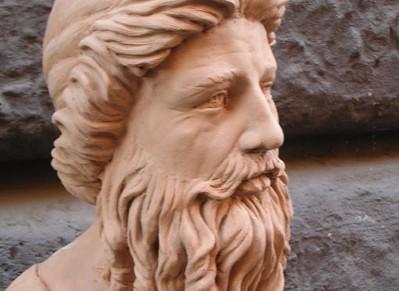
White and red clay, tools and modelling techniques.
This technique is complementary and necessary in order to transform and make a simple object, made of frail clay or a work of art, last forever.
The Moulding Course includes the learning of classic techniques of plaster moulding which have always been used for the reproduction of objects of any type and use, made with clay or other materials.
The Plaster Moulding is still considered today to be an art which is necessary to the “Cinema” and the “Television” in order to realize period scenographies and furnishings, to Museums and Art Foundries to realize bronze works, to the Ceramics Industries and the Ceramic Artisans.
Furthermore, the Moulding Course allows to learn the techniques used for the realization of plaster stucco works (Rose windows, Arches, Columns, Frames, etc…) still made today with the classic techniques (Modine, Forms etc…) to furnish rooms in an elegant and refined way.
To be “specific”, throughout this Course we shall also study in depth the moulding applied to the “LEAKAGE” technique which allows to reproduce objects made of ceramic and any other types with moulds in an “industrial” manner.
Groups are limited to nine people. Tailored workshops and intensive courses are available on request.
The programme
- 01Getting to know materials and tools.
- 02Basic exercises: line, mixing, proportion.
- 03Life study and copying the masters.
- 04Personal project with individual guidance.
Frequently asked questions
When do lessons take place?
Monday to Friday: 10:00–13:00 · 17:00–20:00. Saturday: 15:30–18:30. The school is closed on Sunday. Each course has one lesson a week.
How much does the course cost?
Enrolment costs € 50 and the monthly fee is € 130.
How long is a lesson?
Each lesson lasts 3 hours and takes place once a week.
Where are the courses held?
Courses are held at the MateArts school in Rome: Via Urbino 7/9 — 00182 Roma.
How can I get information or enrol?
You can call the school on (+39) 06 6788 7487 or write to info@matearts.com.
What does the course cover?
The classic techniques of plaster moulding, used to reproduce objects of any type made with clay or other materials, and the techniques for plaster stucco works such as rose windows, arches, columns and frames.
Why is plaster moulding still important today?
It is still considered necessary to cinema and television for period scenographies and furnishings, to museums and art foundries for bronze works, and to ceramics industries and ceramic artisans.